Your chauffeur in Haguenau
Entzheim, Baden-Airpark or the station
Entzheim Airport lies south-west of Strasbourg and Haguenau to the north, so your chauffeur crosses the whole conurbation on the M35 before taking the D1340, which enters the town as the Route de Strasbourg. Add your flight number to the booking; your chauffeur confirms exactly where in the arrivals hall you will meet. Without a car, it takes two trains: the shuttle reaches Strasbourg station in 8 minutes, up to five times an hour, for €3.20 on its own, and then you change platforms, luggage in hand, for a regional train to Haguenau.
The other airport within easy reach is in Germany: Karlsruhe/Baden-Baden Airport, known as Baden-Airpark, at Rheinmünster on the far bank of the Rhine. For drivers from France, the airport gives its own directions: the A35 to exit 56, Forstfeld, then right straight after the Rhine bridge. For rail, it points to the German stations of Baden-Baden, Bühl and Rastatt, and suggests a taxi or shuttle service to anyone coming from Strasbourg. The site publishes two routes from Baden-Airpark, to Strasbourg and to Colmar; neither goes on to Haguenau. Because the border may be checked, every passenger, children included, should carry a passport or national identity card.
Haguenau station, opened in 1855, has regular regional trains to Strasbourg, with others to Wissembourg and Niederbronn-les-Bains. Give your train number when you book, and your chauffeur will tell you before you arrive where to find them. They can also collect you in Strasbourg, from your hotel or the central station; the road to Haguenau then covers 34 km.
The old town: a shared-space zone and a pedestrian area
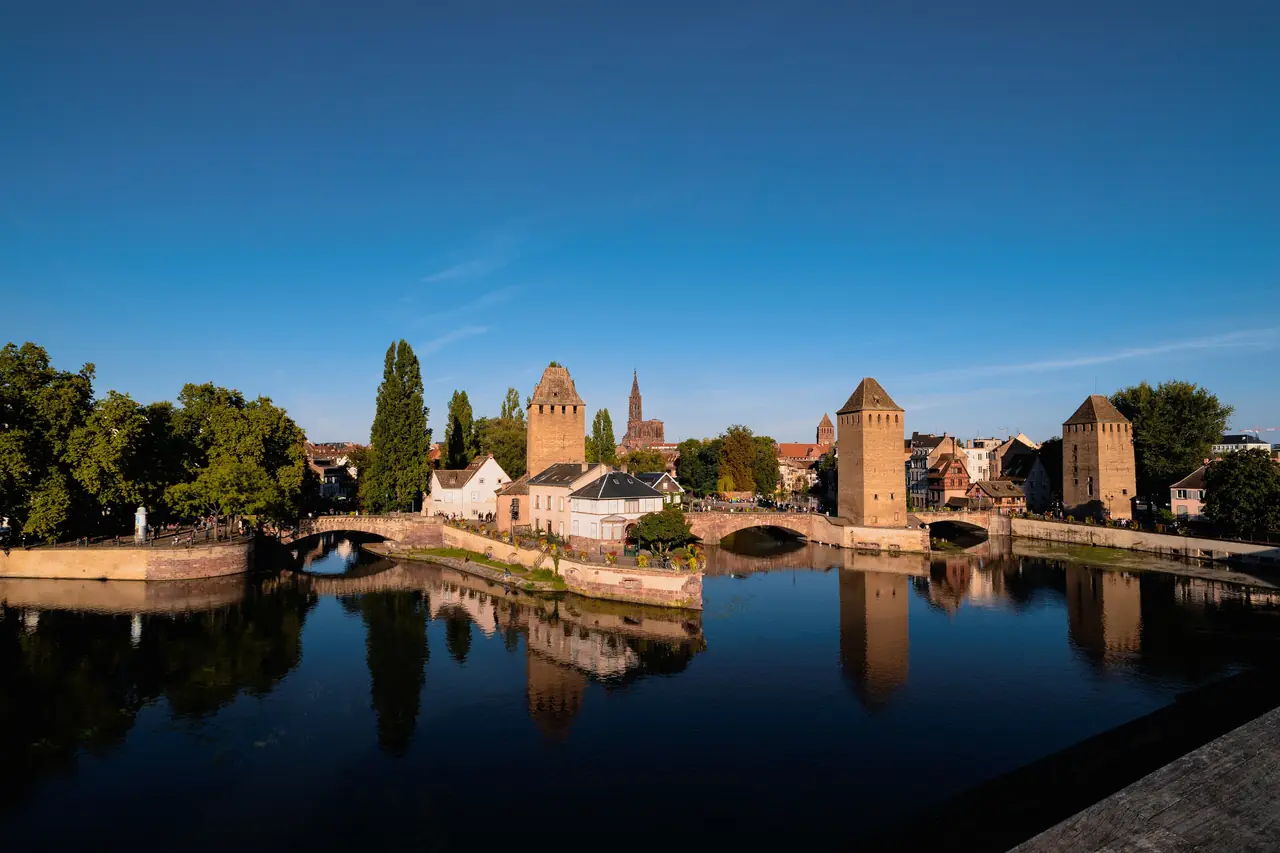
Haguenau began around 1115 with a castle built on an island in the River Moder. Frederick Barbarossa granted it a charter of liberties in 1164; from the late 13th century it housed the Grand Bailiff, the emperor’s representative in Alsace, and it became the chief town of the Decapolis, the league of ten towns formed in 1354. In 1677, on the orders of Louis XIV, the town was set on fire twice and destroyed. With 36,000 inhabitants, it is now the fourth-largest town in Alsace.
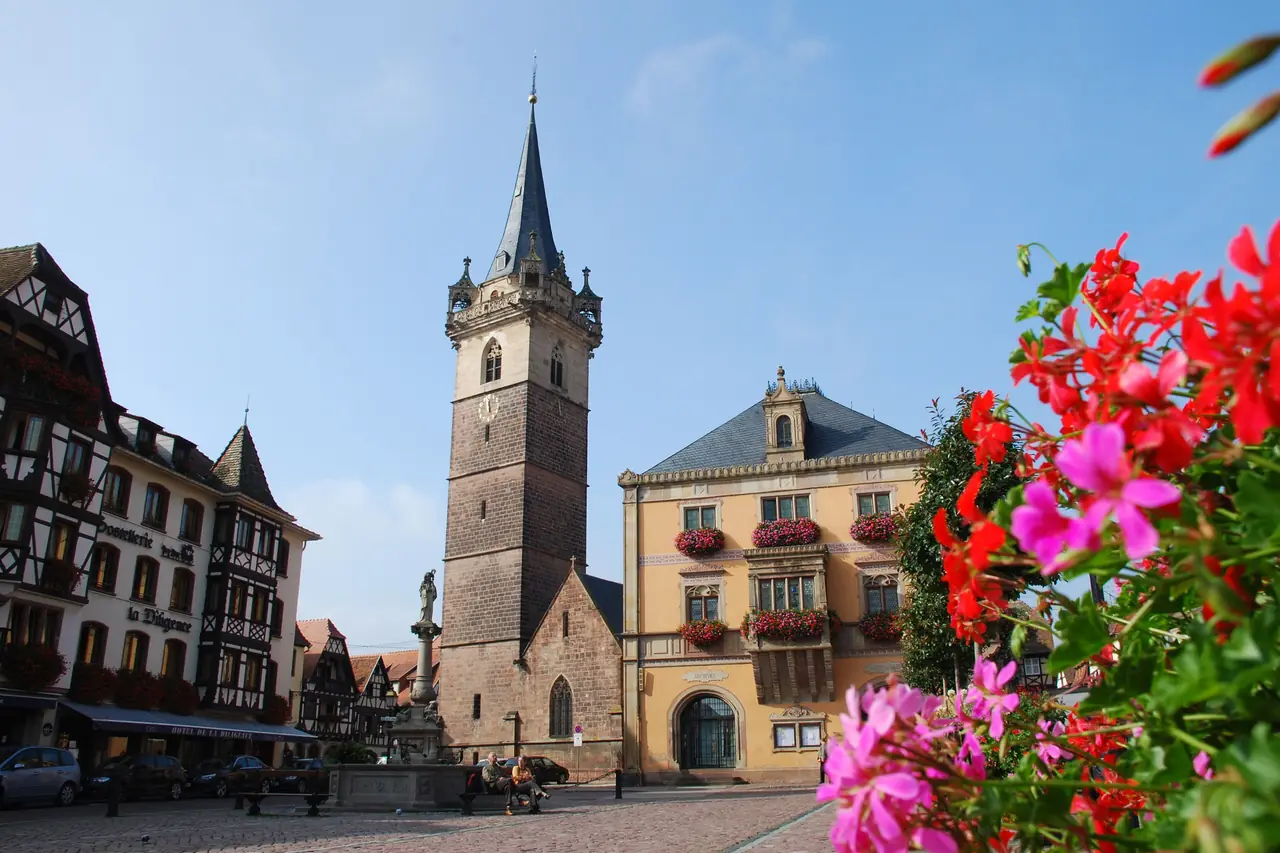
The heart of the town is a shared-space zone (zone de rencontre), laid out in 2012. From April to November the town closes it to cars on Saturdays, Sundays and public holidays from 12 noon to 10 pm; on other days and every morning it stays open to traffic, deliveries included, unless an event is on. The tourist office and the Musée Alsacien, on Place Joseph Thierry, sit within the pedestrian area. Depending on the day and time, your chauffeur therefore drops you at the address itself or as close as they can, at a point they confirm with you.
Three addresses in the centre tell the town’s story. The Romanesque church of Saint-Georges, authorised in 1143 and finished in 1189, still has two of the five bells cast in 1268 by Heinrich, a Haguenau bell-founder. The Musée Historique, 9 Rue du Maréchal Foch, occupies a neo-Renaissance building put up between 1900 and 1905 for the collections of the mayor Xavier Nessel, including finds from more than 750 Bronze and Iron Age burials in the forest; from mid-September to the end of June it opens Wednesday to Sunday, 2 pm to 5.30 pm. The Musée Alsacien, set up in 1972 in the old chancery, recreates the rooms of a traditional house and a potter’s workshop.
The Forêt d’Exception on the town’s doorstep
Haguenau is ringed by forest. Its undivided part, owned jointly by the French State and the town, covers 13,400 hectares: the largest undivided forest in France and the largest lowland forest in Alsace, awarded the Forêt d’Exception® label on 30 January 2020. Beside the Eberbach stream, the Gros-Chêne site brings together the Saint-Arbogast chapel, named after the hermit said to have lived beneath an oak before becoming Bishop of Strasbourg in the 6th century, a children’s playground and the start of waymarked trails, one of them suited to people with reduced mobility and to pushchairs.
A day that strings together a business meeting, a walk at the Gros-Chêne and dinner in town suits a chauffeur on call: one driver stays with you from one address to the next, with no new booking between stops. It is booked for 2, 4, 6 or 8 hours; each hour includes 10 km, with a minimum of 20 km, and any kilometres beyond that are charged on top.
The zone’s catalogue also has ready-to-book excursions: “Strasbourg”, the Alsatian capital at your own pace, or, across the Rhine, “Baden-Baden”, the spa town, and “Black Forest”, with its panoramic roads and lakes. They are counted from Strasbourg, not from Haguenau; for Germany, bring identity documents for the whole family.
December and late August: the two big moments
The 2026 Christmas market runs from 20 November to 30 December, except on the 25th, with some 70 stalls on the squares of the centre. They open on Mondays from 2 pm to 7 pm, Tuesday to Thursday and on Sundays from 10 am to 7 pm, and on Fridays and Saturdays from 10 am to 8 pm; on opening day from 4 pm to 8 pm, on 24 December from 10 am to 4 pm and on the 26th from 2 pm to 8 pm. Saint Nicholas visits on Sunday 6 December, illuminated vehicles parade on Sunday 13 December, and a closing parade ends the season on Wednesday 30 December.
In late August, the Festival du Houblon brings together music and dance from around the world; its 65th edition ran from 18 to 23 August 2026 across the Halle aux Houblons, the Théâtre and the Forum des Cultures. The 2027 dates have not yet been published.
On a market or festival evening, book the ride back together with the outward journey, for the time you expect to leave, rather than looking for a car at closing time. With a chauffeur on call, your driver stays with you for the time booked; if the evening runs on, let them know.
Highlights and seasonality
Periods such as Christmas market and regional trade fairs may affect access and traffic. Sharing your plans in advance helps us suggest a realistic margin without presenting journey times as guaranteed.